Toronto’s thriving beauty industry and diverse population create ideal conditions for nail technicians to build successful businesses. From mobile nail services serving busy professionals in condos downtown to boutique nail studios in trendy neighbourhoods like Leslieville and The Beaches, entrepreneurial nail techs are carving out profitable niches across Canada’s largest city.
But launching a legitimate, professional nail business requires more than just technical skills. Understanding Toronto’s regulatory requirements, obtaining proper credentials, and establishing your business correctly protects you legally whilst building client trust and long-term success.
This comprehensive guide walks you through everything you need to know about starting a nail business in Toronto, from essential training and certification to business registration, insurance, and ongoing compliance requirements.

Why Toronto Is Ideal for Nail Business Owners
Before diving into requirements, it’s worth understanding why Toronto offers such promising opportunities for nail entrepreneurs.
Large, Diverse Market: With over 2.9 million residents representing virtually every culture globally, Toronto provides built-in demand for diverse nail styles, techniques, and price points. From classic manicures to intricate nail art inspired by Korean trends, Caribbean colours, or European elegance, Toronto’s multicultural makeup supports specialisation in various aesthetics.
High Disposable Income: Toronto residents generally have higher disposable incomes than most Canadian cities, supporting premium pricing for quality nail services. Neighbourhoods like Yorkville, Rosedale, and Forest Hill support luxury nail services at $80-$150+ per appointment.
Beauty-Conscious Culture: Toronto’s fashion-forward culture and social media saturation create consistent demand for well-maintained nails. Professional appearance matters in Toronto’s competitive employment market, driving regular nail maintenance appointments.
Multiple Business Model Options: Toronto’s size and diversity support various business models including mobile services, home-based studios, booth rental, and full salon operations. You can choose the model matching your circumstances, budget, and goals.
Strong Public Transit and Cycling Infrastructure: Unlike car-dependent cities, Toronto’s transit and cycling networks allow nail technicians to operate successfully without vehicles through mobile setups using public transit or building neighbourhood-based practices where clients can walk or bike.
Essential Training: Your Foundation for Success
Professional training is your foundation for building a legitimate nail business in Toronto. Whilst Ontario doesn’t mandate provincial licensing for nail technicians, quality training remains essential for multiple critical reasons.
Why Proper Training Matters
Technical Competency: Comprehensive nail courses teach proper acrylic and gel application techniques, safe electric file usage, sanitation protocols that prevent infections, nail anatomy and potential health issues, and client consultation and service customization. Without proper training, you risk damaging clients’ natural nails, causing infections through poor sanitation, and creating substandard results that damage your reputation.
Legal Protection: Professional liability insurance—essential for any nail business—requires proof of training from recognized providers. Insurance companies won’t issue policies to untrained individuals because the risk of client injury or damage is too high.
Client Trust: Today’s educated consumers research their service providers. Certification from recognized beauty schools demonstrates professionalism and competency that attracts quality clients willing to pay fair prices. Uncertified technicians often struggle to build reputable businesses beyond friends and family.
Practical Business Skills: Quality nail courses include business training covering pricing strategies, client management, marketing fundamentals, and legal compliance—skills that separate successful businesses from struggling ones.
What Your Nail Course Must Cover
Comprehensive nail technician training should include acrylic nail application covering liquid and powder ratios, proper application techniques, shaping and filing, and maintenance and fills.
Gel nail techniques should teach base gel application, builder gels, gel polish, and proper curing under LED/UV lamps.
Natural nail care including manicure and pedicure procedures, cuticle care and conditioning, nail shaping and buffing, and hand and foot massage techniques form essential foundational skills.
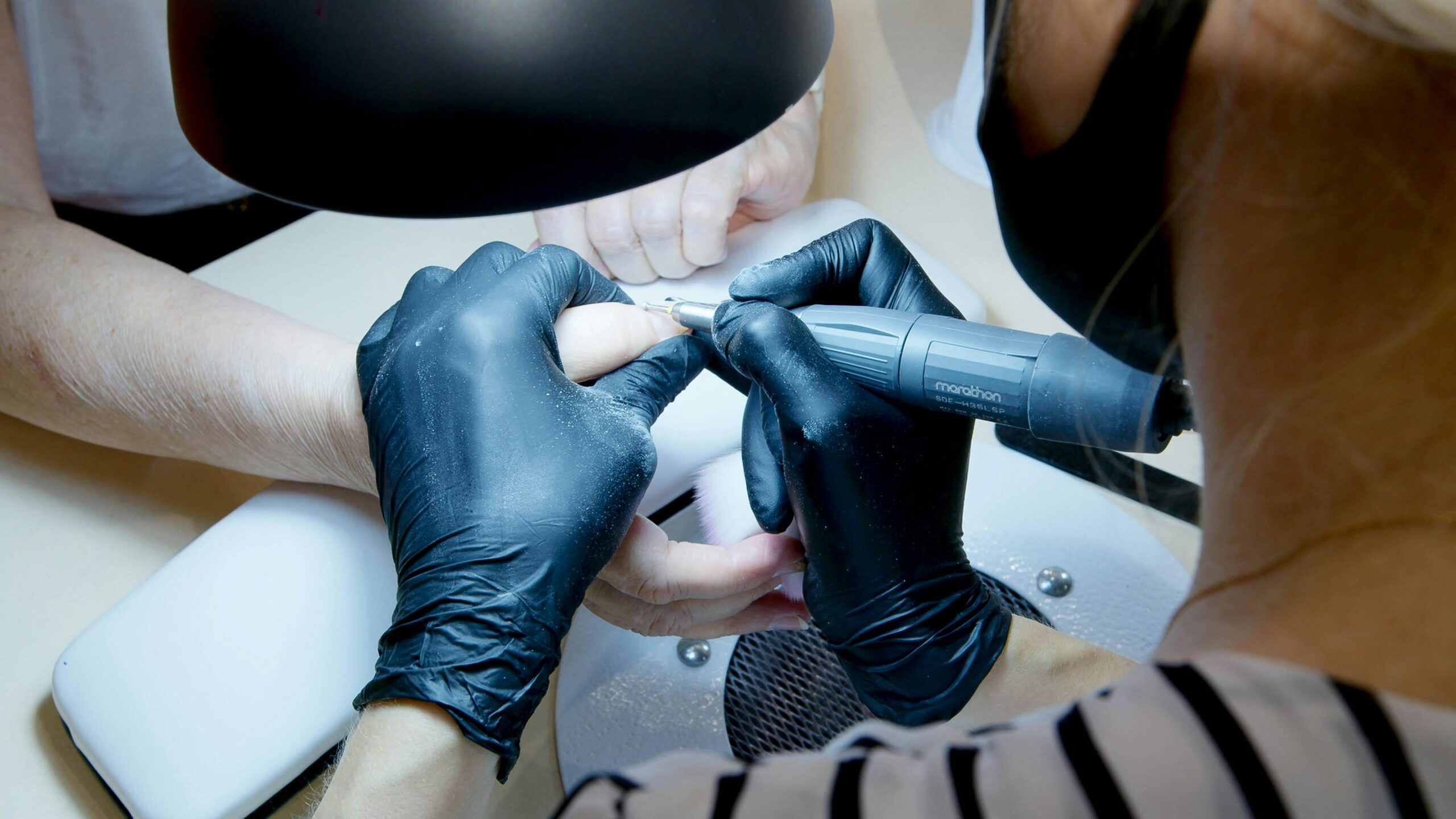
Electric file training teaches safe usage on natural and artificial nails, different bit types and their purposes, appropriate speed settings, and avoiding heat and damage.
Nail art and design skills cover colour theory and design principles, hand-painting techniques, stamping and transfer methods, and embellishments including gems and foils.
Health, safety, and sanitation protocols ensure proper workspace sanitization, tool sterilization between clients, understanding bloodborne pathogens, and personal protective equipment usage.
Client consultation teaches assessing client needs and expectations, explaining procedures and maintenance, conducting patch tests when necessary, and managing client relationships for retention.
Choosing Quality Training
Several options exist for nail training in Toronto and across Ontario, each with distinct characteristics.
Online Nail Courses: Offer maximum flexibility, allowing you to study around existing commitments. Quality online programs like Canadian Beauty School’s Certificate in Nail Tech provide comprehensive video instruction, professional starter kits, and experienced tutor support via email and video calls. Online courses typically cost $1,200-$2,500 and can be completed in 3-12 months at your own pace.
For a detailed comparison of learning formats, read our guide on online vs in-person beauty courses in Canada to understand which approach best suits your circumstances.
In-Person Beauty Colleges: Traditional beauty colleges in Toronto offer structured programs with hands-on supervision. These typically cost $3,000-$8,000 and require regular attendance over several months. The structured environment works well for full-time students but can be challenging for those balancing work or family commitments.
Hybrid Programs: Some providers offer combinations of online theory with periodic in-person practical sessions, attempting to balance flexibility with hands-on instruction.
For most aspiring Toronto nail business owners, online training offers optimal value, flexibility, and quality when choosing reputable providers with comprehensive curricula and strong support systems.

Business Registration and Licensing in Toronto
Once you’ve completed your training, properly registering your nail business is essential for legal operation and professional credibility.
Registering Your Business Name
If operating under any name other than your personal legal name, you must register a business name with the Ontario government. This process, often called registering a “Doing Business As” or DBA, costs approximately $60 for sole proprietorships and is valid for five years.
You can register business names online through Ontario’s Business Registry at https://www.ontario.ca/page/register-or-change-sole-proprietorship-or-partnership. The process takes about 20 minutes and approval is typically immediate for names that don’t conflict with existing businesses.
Choose a name that is memorable and relevant to your services, not already in use by another Ontario business, doesn’t include restricted words requiring special permission, and works well for branding and social media handles.
Toronto Business Licensing
Toronto requires business licenses for most commercial activities. Nail technicians operating businesses within Toronto must obtain a business license from the City of Toronto.
The licensing process involves completing the online application at toronto.ca/business-licenses, paying the license fee (typically $100-$200 annually depending on business type), and providing proof of business registration if using a business name.
For home-based nail businesses, you may need to demonstrate your home is zoned appropriately for commercial activity. Most residential areas in Toronto allow home-based businesses with restrictions on signage, parking, and noise.
Mobile nail businesses still require Toronto business licenses even without a fixed location, as you’re conducting business within city limits.
Provincial and Federal Tax Registration
GST/HST Registration: If your annual revenue exceeds $30,000, you must register for and collect GST/HST (13% in Ontario). Many nail businesses register voluntarily even below this threshold because it allows you to claim input tax credits on business expenses.
Register for GST/HST through the Canada Revenue Agency at canada.ca/taxes. The process is free and can be completed online in about 30 minutes.
Business Number: When registering for GST/HST, you’ll receive a Business Number (BN) from CRA. This nine-digit number identifies your business for tax purposes and is required for various government interactions.
Professional Liability Insurance: Non-Negotiable Protection
Professional liability insurance, also called errors and omissions insurance, protects you if a client claims your services caused harm or damage. For nail technicians, this coverage is absolutely essential.
Why Insurance Matters
Nail services involve potential risks including allergic reactions to products, skin infections from improper sanitation, damage to natural nails from incorrect technique, and burns from electric files, drills, or hot wax.
Even with excellent training and careful practice, accidents can happen. A client might have an unexpected allergic reaction despite patch testing, equipment might malfunction, or a client might claim damage regardless of actual fault.
Without insurance, you’re personally liable for any claims, settlements, or legal defence costs. A single lawsuit could bankrupt your business and devastate your personal finances. Insurance provides financial protection and legal defence if claims arise.
Obtaining Nail Technician Insurance
Several Canadian insurance providers specialize in beauty industry coverage. Policies typically cost $300-$600 annually depending on coverage limits, services offered, and whether you’re mobile or salon-based.
Most insurers require proof of training from recognized providers before issuing policies. Your certificate from Canadian Beauty School or other accredited programs satisfies this requirement.
When obtaining quotes, ensure your policy covers all services you’ll provide (acrylics, gels, nail art, etc.), includes both mobile and fixed location coverage if applicable, provides adequate liability limits (typically $1-2 million), and includes protection for your tools and equipment.
Business Insurance Considerations
Beyond professional liability, consider additional coverage including general liability insurance covering non-professional claims like client injuries from slips and falls in your space, property insurance protecting your equipment, tools, and inventory from theft or damage, and business interruption insurance replacing income if you’re unable to work due to injury or illness.
For home-based businesses, standard homeowner’s insurance typically doesn’t cover business activities. Discuss your nail business with your insurance broker to ensure appropriate coverage.
Health and Safety Compliance
Toronto Public Health regulates personal services including nail care to protect public health and safety. Compliance with health regulations isn’t optional—violations can result in fines, closure orders, or legal liability if clients are harmed.
Sanitation and Disinfection Requirements
Proper sanitation protects both you and your clients from infection and disease transmission. Ontario’s regulations and industry best practices require specific protocols.
All implements contacting skin must be properly disinfected or disposed of between clients. Non-porous metal tools must be cleaned with soap and water, then disinfected with hospital-grade disinfectant following manufacturer’s contact times, and finally stored in clean, covered containers.
Porous implements like nail files, buffers, and orange wood sticks must be single-use and disposed of after each client. Sharing these items between clients violates health regulations because they cannot be adequately disinfected.
Work surfaces must be cleaned and disinfected between each client. Towels, capes, and linens must be freshly laundered for each client. All potentially contaminated items must be stored separately from clean supplies until properly processed.
Infection Control Procedures
Beyond basic sanitation, professional infection control requires hand hygiene through handwashing before and after each client and using hand sanitizer throughout services.
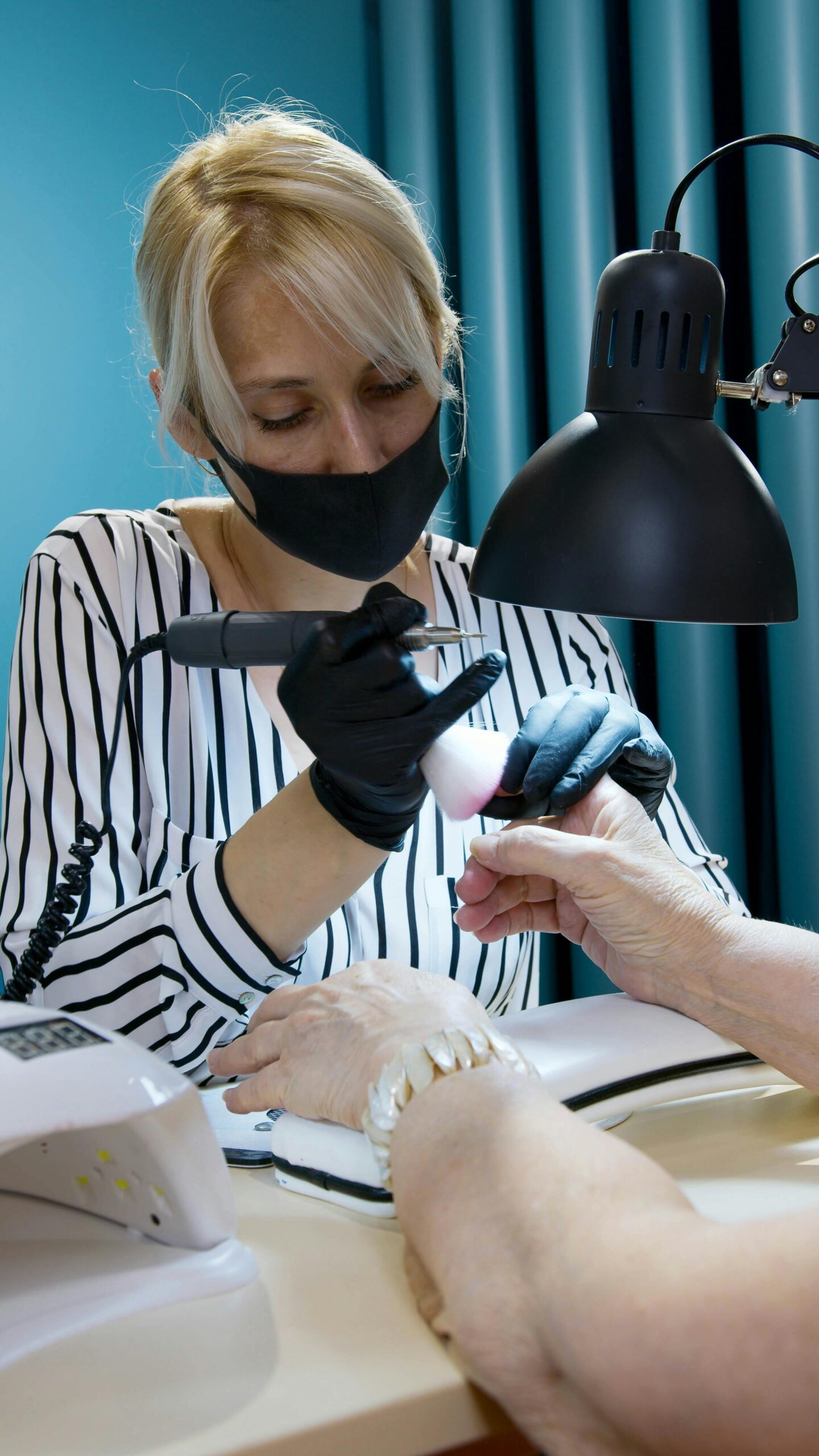
Personal protective equipment including disposable gloves for certain procedures, especially when client has cuts or infections, and face masks when filing or working with dust-producing activities protects both you and clients.
Proper waste disposal is critical. Contaminated items like used files, cotton pads, and gloves must be disposed of in covered waste containers. Sharps like cuticle nippers must be handled carefully to prevent injury and disposed of properly if damaged.
Blood spill procedures must be established. Though rare in nail services, you must know how to properly manage situations where clients bleed from cuticle cutting or hangnail removal.
Workspace Requirements
Whether operating from home, renting space, or owning a salon, your workspace must meet basic requirements for health and safety.
Adequate ventilation is crucial when working with nail products releasing fumes. Natural ventilation through windows may suffice for occasional home services, but regular business operations typically require mechanical ventilation systems.
Proper lighting ensures you can see clearly to provide detailed work without eye strain. Both your work area and your view of clients’ nails should be well-lit with appropriate task lighting.
Clean water supply and handwashing facilities must be readily accessible. For mobile technicians, this means ensuring your service locations have these facilities available.
Proper storage keeps products, tools, and supplies organized and protected from contamination. Clean items must be stored separately from used or contaminated items awaiting disinfection.

Setting Up Your Nail Business Operations
With legal and safety requirements addressed, establishing efficient business operations ensures smooth daily functioning.
Choosing Your Business Model
Several business models suit nail technicians in Toronto, each with distinct advantages and requirements.
Home-Based Studio: Operating from your home offers lowest overhead, no commute, and complete schedule control. Requirements include verifying your property zoning allows home businesses, possibly modifying insurance policies, creating professional dedicated space separate from personal living areas, and managing client traffic and parking considerations.
Home studios work well for building initial clientele before transitioning to larger operations or for established technicians preferring lower overhead and work-life integration.
Mobile Nail Services: Traveling to clients’ homes or workplaces provides flexibility and convenience that commands premium pricing. Requirements include reliable transportation, portable professional setup including lighting and ventilation, efficient booking system coordinating travel between appointments, and higher insurance coverage for multiple locations.
Mobile services work well for targeting busy professionals, corporate clients, or clients with mobility limitations making salon visits difficult.
Booth Rental: Renting space in established salons provides professional environment, existing foot traffic, and independence without full business ownership responsibility. Costs typically range from $150-$600 weekly in Toronto depending on location and amenities.
Booth rental suits technicians with established clientele who want independence without the investment and risk of opening their own salons.
Opening a Salon: Full salon ownership offers highest profit potential but requires significant investment in leasing commercial space, purchasing equipment and furniture, hiring and managing staff as you grow, and comprehensive marketing and business management.
Salon ownership suits experienced technicians with business acumen, adequate capital, and entrepreneurial drive.
Pricing Your Services
Competitive pricing balances attracting clients whilst ensuring profitability. Toronto nail service prices vary significantly by neighbourhood, service type, and your experience level.
Research competitors in your target market to understand local pricing. Downtown and affluent neighbourhoods typically support higher prices than suburban areas. Basic manicures range from $25-$50, gel manicures from $40-$70, and acrylic full sets from $50-$90 in most Toronto markets, with premium locations charging significantly more.
Calculate your costs including product costs per service, equipment and tool expenses, business overhead (rent, insurance, licenses), and your desired income. Ensure pricing covers costs with adequate profit margin.
Consider offering package deals and memberships encouraging repeat visits, like 4 gel manicures for the price of 3, or monthly memberships providing regular services at discounted rates.
Booking and Scheduling Systems
Efficient booking systems prevent scheduling conflicts, reduce no-shows, and create professional client experiences.
Online booking software like Fresha, Square Appointments, or Booksy allow clients to book 24/7, automatically send reminders reducing no-shows, manage your calendar across devices, and collect payments and deposits.
Requiring credit card deposits at booking, typically $10-$25, reduces no-shows significantly. Clear cancellation policies should give clients adequate notice requirements (typically 24-48 hours) before charging cancellation fees.
Marketing Your Toronto Nail Business
Attracting clients requires consistent marketing across multiple channels.
Instagram and Social Media: Visual platforms like Instagram are essential for nail businesses. Post high-quality photos of your work regularly, use relevant hashtags including #TorontoNails, #TorontoNailTech, and neighbourhood-specific tags, engage with potential clients by commenting and responding promptly, and share behind-the-scenes content showing your process and personality. Consider taking a social media course to sharpen your content strategy and hashtag targeting.
Google My Business: Claiming and optimizing your Google Business Profile helps Toronto clients find you through local search. Ensure accurate business information, regularly post updates and photos, encourage satisfied clients to leave reviews, and respond professionally to all reviews.
Local Partnerships: Connect with complementary businesses including hair salons referring clients needing nail services, bridal boutiques recommending wedding nail services, and yoga studios or wellness centres whose clients value self-care.
Referral Programs: Encourage word-of-mouth through referral incentives like offering existing clients discounts for successful referrals or providing new clients special pricing for their first appointment.

Ongoing Compliance and Professional Development
Launching your business is just the beginning. Maintaining compliance and developing your skills ensures long-term success.
Annual Renewals and Updates
Stay current with annual business license renewals through the City of Toronto, insurance policy renewals with updated coverage as needed, business name renewals every five years if using a registered name, and tax filing and remittance of GST/HST if registered.
Set calendar reminders well before deadlines to avoid lapses in licenses or insurance leaving you operating illegally or without protection.
Continuing Education
The nail industry constantly evolves with new techniques, products, and trends. Ongoing education keeps your skills current and services competitive.
Attend workshops and trade shows including the Toronto Beauty Show for latest products and techniques, nail art competitions inspiring creativity, and manufacturer training on new product lines.
Follow industry leaders and educators on social media, take specialized courses in advanced techniques like nail art, gel extensions, or specific brand systems, and join professional associations providing resources and networking opportunities.
Maintaining Professional Standards
Beyond legal compliance, professional standards protect your reputation and build client loyalty.
Always prioritize client safety over speed or profit, maintain impeccable sanitation regardless of time pressure, honestly assess which services you can perform competently, and refer clients to specialists when needed for services outside your expertise.
Respond professionally to complaints or concerns, addressing issues promptly and fairly even when uncomfortable. Your reputation in Toronto’s interconnected beauty community spreads quickly—both positive and negative.

Your Roadmap to Toronto Nail Business Success
Starting a nail business in Toronto requires navigating various requirements, but each step protects your interests whilst building a legitimate, professional operation positioned for long-term success.
Complete comprehensive nail training from recognized providers, covering both technical skills and business fundamentals.
Register your business properly including business name registration, Toronto business license, and GST/HST registration if applicable.
Obtain professional liability insurance protecting you from potential claims and providing peace of mind.
Establish compliant workspace and procedures meeting Toronto Public Health requirements for sanitation and safety.
Set up efficient business operations including booking systems, pricing structures, and marketing strategies.
Maintain ongoing compliance and development through annual renewals, continuing education, and professional standards.
This may seem like significant work upfront, but these steps create strong foundations supporting profitable, sustainable nail businesses serving Toronto’s diverse, beauty-conscious population.
The opportunities are real. Toronto’s size, diversity, and affluence create ideal conditions for skilled, professional nail technicians to build thriving businesses. The question is whether you’ll take the necessary steps to position yourself for success.
Ready to launch your Toronto nail business? Start with quality training that prepares you for both technical excellence and business success. Canadian Beauty School’s Certificate in Nail Tech provides comprehensive online education covering everything from acrylic application to client management, setting you up for legitimate, compliant business operations in Toronto’s competitive beauty market.